Wax Myrtle

Wax myrtle
This rapidly-growing, small, evergreen native tree is capable of reaching a height of 25 feet with an equal spread but is usually seen in the 10 to 20-foot range. Sometimes used as a large shrubbery screen, Southern Waxmyrtle is ideal for use as a small tree, the lower limbs removed to reveal its picturesque form.
How fast does wax myrtle grow?
Fast growth rate. From 3 to 5 feet of growth per year, the Wax Myrtle is one of the fastest-growing privacy hedges.
Do wax myrtles repel mosquitoes?
First, Wax Myrtle. The plant has a little pungent odor when the leaves are rubbed. It's a native, so that makes it really inexpensive as mosquito control for the area, Gaskins said. The plant can be used as a hedge for front or backyards, and it works really well in pots.
Where does wax myrtle grow best?
The Waxmyrtle is winter hardy to USDA Zones 7-10 where it is easily grown in average, medium to wet soils in full sun to dappled or part shade. It even grows in the elusive dry shade.
Do wax myrtles have invasive roots?
The USDA factsheet on wax myrtle says that this plant is easy to transplant bare root which suggests that it is not have much of a taproot (if any). Also wax myrtle spreads by sending up suckers from the roots and has been frequently used as a bonsai plant (more evidence that it has a fibrous root system).
What is the lifespan of a wax myrtle?
Southern Wax Myrtle will grow to be about 15 feet tall at maturity, with a spread of 10 feet. It has a low canopy, and is suitable for planting under power lines. It grows at a fast rate, and under ideal conditions can be expected to live for approximately 30 years.
Do wax myrtle attract bees?
Myrica cerifera Birds such as wild turkey, quail, waterfowl, catbirds, bluebirds and warblers are attracted to the pale blue berries that the female plants grow in the fall and maintain throughout the winter. Butterflies and bees will also flock to tree, but because of its aromatic foliage, it will repel insects.
Do birds eat wax myrtle berries?
Gray catbirds and white-eyed vireos are also known to feed on wax myrtle berries. Apparently not all birds can digest the waxy coating. Another winter visitor that sometimes depends on wax myrtle berries, along with holly and other winter fruit, is the tree swallow.
What does wax myrtle smell like?
Fast-growing, Morella cerifera (Southern Wax Myrtle) is a densely bushy, evergreen shrub or small tree with glossy, aromatic, oblanceolate, olive green leaves, 3-5 in. long (7-12 cm). The foliage emits a bayberry candle fragrance when crushed.
Will wax myrtles survive a freeze?
Evergreens and more frost-resistant trees and shrubs should fare better. Common examples of this group of plants are yaupon hollies, wax myrtles, and crape myrtles. These species may brown in sections, but ultimately survive.
Is wax myrtle toxic to dogs?
If your dog ingests any amount of the wax leaf, it needs to be treated as a medical emergency. The wax leaf plant is a popular plant used in hedges and as an ornamental. If your dog ingests a piece of this plant, it can lead to symptoms of toxicity.
What time of year do you plant wax myrtle?
Plants should be planted into their permanent positions in the late spring or early summer. In exposed situations, the wax myrtle forms a little more than a bushy arborescent shrub but in protected areas it becomes a medium sized tree, much branched and densely leafy, with a gray warty unfissured bark (Howell 1949).
Do wax myrtles smell?
The wax myrtle belongs to the wax myrtle family (Myricaceae), and is characterized by the aromatic glands found on the surfaces of its leaves. These glands release a sweet odor when crushed.
What is the difference between a wax myrtle and a southern wax myrtle?
The natural shape of the southern wax myrtle is a large rounded shrub or multi-trunk tree they can
Can you cut back wax myrtle?
It is a fairly wispy open plant, so it shouldn't be casting too much shade on your neighbor's grass, but in the interest of good neighborhood relations, you can certainly prune it back to 8 to 10 feet. Wax myrtle is very forgiving of pruning, and we saw several different suggestions when we searched on the Internet.
Do wax myrtles need a lot of water?
Southern wax myrtle tolerates moist and dry soils, but grows best when watered around the drip line every 10 to 14 days; however, don't water your tree around the trunk.
Do wax myrtles spread?
To produce an unbroken hedge, your wax myrtles must be no farther apart than their eventual spread, usually about 20 or 25 feet. If each plant reaches 20 feet, and therefore spreads to 10 feet on each side, then two hedges will eventually meet in the middle of a 20-foot spacing.
Do wax myrtles need full sun?
Wax Myrtle can be grown in full sun or part shade. Plants growing in more sun will have more dense foliage. A minimum of 4 to 5 hours of direct sunlight is suggested.
What animals eat wax myrtle berries?
Clusters of tiny blue-silvery berries (drupes) that form along the branches are a favored source of food for many birds including wild turkeys, quails, tree swallows, bluebirds, thrashers and waterfowl.
What animals eat wax myrtle?
Wax myrtle is not just for deer, of course. It creates a perfect habitat for wildlife like turkeys and quails to peck at its berries when they ripen. You can even use its leaves to flavor your soups and stews or use the wax covering its berries to make scented candles.
10 Wax myrtle Images
Meet nice native wax myrtle and wonderful warbler that likes it as
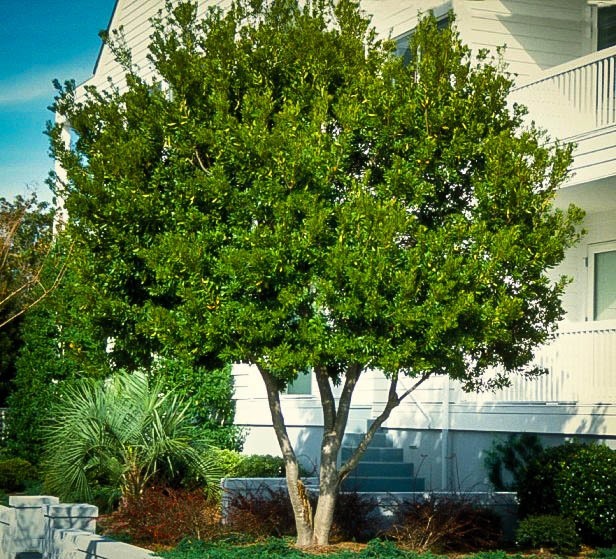
Pin on Privacy landscaping

Wax Myrtle in front of a beach house deck Florida landscaping

Pin on Native Plants

Florida Native Plant Society Wax myrtle Florida native plants

wax myrtle tree keeps leaves in winter berries attract birds House

Wax Myrtle Fast Growing Evergreen Full sun httpwww

Pin on Reno yard

Dwarf Wax Myrtle Southwest Nursery Landscaping supplies Plants

Post a Comment for "Wax Myrtle "